Home > Resource Center > Measuring Tips
Choose a sub category:
Sizing for Round Objects Measuring Shrink Bags Measuring for Vacuum Pouches

Tips for measuring flat, guesseted and reclosable bags!


Measuring for any poly or cell bag that is to be filled is important. Listed below are tips for measuring flat cello bags, gusseted cellophane bags & reclosable poly bags sold on this site.


  • All poly bag measurements are inside diameter (ID).
  • The first dimension stated when describing a poly bag is the width.
  • Please note also that gauge is the thickness of the bag. It is not really a necessary measurement for sizing bags. Gauge is important when you are using the bags for heavy items - you may require heavy duty.

Bag Type Order of Measurement

Flat Bags: Width x Length x Gauge
Side Gusset Bags: Width x Gusset x Length x Gauge
Bottom Gusset Bags: Width x Length x Gusset x Gauge


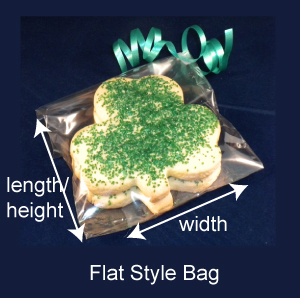
Measuring Cello Bags FlatMeasuring for Flat Bag: Width x Length

Width = Opening of bag (across the top of the bag)
Length
= Usable portion of bag (from top to bottom of the bag)
Gauge
= Film thickness, measured in mils or microns

Example
Width
= 8 inches
Length
= 5 inches
Gauge = .002 inches

Bag size is written as: 8” x 5” 2 mil


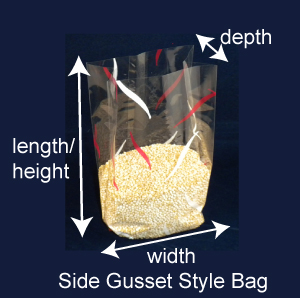
Measuring Cello Bags SquareMeasuring for Side Gusseted Bags: Width x Gusset x Length

Width = Across opening of the bag (with gusset tucked in)
Gusset
= Depth or Distance across the open face of side pleat
Length
= From the opening to the bottom of the bag
Gauge
= Thickness of bag, measured in mils.

Example:
Width
= 8 inches
Gusset
= 5 inches
Length
= 10 inches
Gauge
= .002 inches

Bag size is written as: 8”x 5” x 10” 2 mil


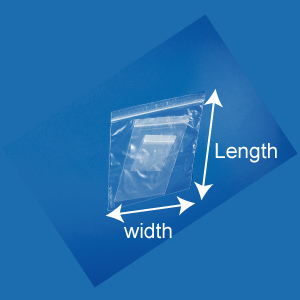
Measuring Reclosable Bags ImageMeasuring for a Reclosable Poly Bag: Width x Length x Gauge

Bags are measured width by length. Width is the outside dimension. Depth is measured from the bottom of the zipper to the bottom of the bag. Due to reinforced side seals, bag openings are approximately 1/2" less than their listed width.

Width = Across opening of the bag (with gusset tucked in)
Length = From the opening to the bottom of the bag
Gauge
= Thickness of bag, measured in mils.

Example:
Width
= 8 inches
Length = 10 inches
Gauge
= .002 inches

Bag size is written as: 8” x 10” 2 mil


Measuring a round object? Click here.


Sizing for Round Objects Measuring Shrink Bags Measuring for Vacuum Pouches

Poly Bag Sizing Calculator for Round Objects

Find the perfect bag size for round items in seconds. Whether you're packaging candles, handmade soaps, ornaments, or any cylindrical product, our free calculator uses the correct formula to determine the ideal flat or gusseted poly bag dimensions.

Why accurate sizing matters:

  • ✓ Professional presentation (no bunching or excess material)
  • ✓ Product protection (proper fit prevents shifting)
  • ✓ Cost savings (right size = no waste)
  • ✓ FDA compliance for food items (proper seal requirements)

Use the calculators below to get instant bag dimensions based on your product measurements:

more info
Helpful info on how to properly measure for shrink wrap bags, shrink bags and shrink basket bags more info

How to Measure Vacuum Seal Bags and Vacuum Pouches

Choosing the right vacuum bag size is critical for a proper seal. Too small and your food won't fit; too large and you waste material. This guide explains exactly how to measure vacuum seal bags for food storage, sous vide cooking, and commercial packaging.

How Vacuum Bag Dimensions Are Measured

Vacuum bags are measured width × length in inches (the flat, unfolded size). For example, a 10" × 13" vacuum bag means:

  • Width: 10 inches (side to side when laid flat)
  • Length: 13 inches (top to bottom)

Important: Measurements refer to the internal bag dimensions (the usable space inside). Always add 2-3 inches to your product length to allow room for sealing.

Step-by-Step: Measuring Your Product

1. Measure the Item Width

Lay your product flat (or at its widest point). Measure side-to-side. Add 1 inch for clearance and sealing space.

2. Measure the Item Length

Measure from top to bottom. Add 3 inches minimum to allow for:

  • 2 inches at the top for sealing
  • 1 inch at the bottom for clearance

For reusable bags (cut and reseal), add 4-5 inches so you can trim and reseal multiple times.

3. Consider Product Thickness

Vacuum bags are flat (2D), but your product is 3D. If your item is thick (steaks, bulky vegetables), the bag needs extra width to wrap around. Add half the product thickness to your width measurement.

Common Vacuum Bag Sizes by Use Case

Product Type Recommended Size
Individual steaks, chicken breasts6" × 10" or 8" × 12"
Family-size portions (4-6 servings)10" × 13" or 11" × 16"
Whole roasts, brisket, large cuts12" × 18" or 14" × 20"
Sous vide vegetables, sides6" × 10" or 8" × 12"
Bulk dry goods (coffee, flour)10" × 16" or 12" × 18"
Liquids, soups, sauces (freeze flat)8" × 12" or 10" × 13"

Vacuum Pouch Volume Guide

Not sure how much a bag holds? Use this capacity reference:

  • 6" × 10": 1-2 cups (~8-16 oz)
  • 8" × 12": 3-4 cups (1 quart)
  • 10" × 13": 6-8 cups (1.5-2 quarts)
  • 11" × 16": 10-12 cups (2.5-3 quarts)
  • 12" × 18": 1 gallon+

Tips for Perfect Vacuum Sealing

  • Leave 2-3 inches of empty space at the top for a strong seal
  • For liquids: Freeze flat first, then vacuum seal (prevents liquid from being sucked into the machine)
  • For sharp items: Wrap in paper towel to prevent punctures
  • Label before sealing: Write contents and date on the bag with a permanent marker

What Mil Thickness Do I Need?

Vacuum bag thickness (mil) affects durability and puncture resistance:

  • 3 mil: Standard for home food storage, sous vide, light commercial use
  • 4 mil: Heavy-duty for bones, frozen goods, long-term freezer storage
  • 5-6 mil: Industrial-grade for commercial kitchens, sharp or abrasive items

Still Not Sure What Size You Need?

Call us: (800) 594-4424
Email: [email protected]

Our packaging experts can recommend the perfect vacuum bag size, mil thickness, and quantity for your needs. Wholesale pricing available.

more info